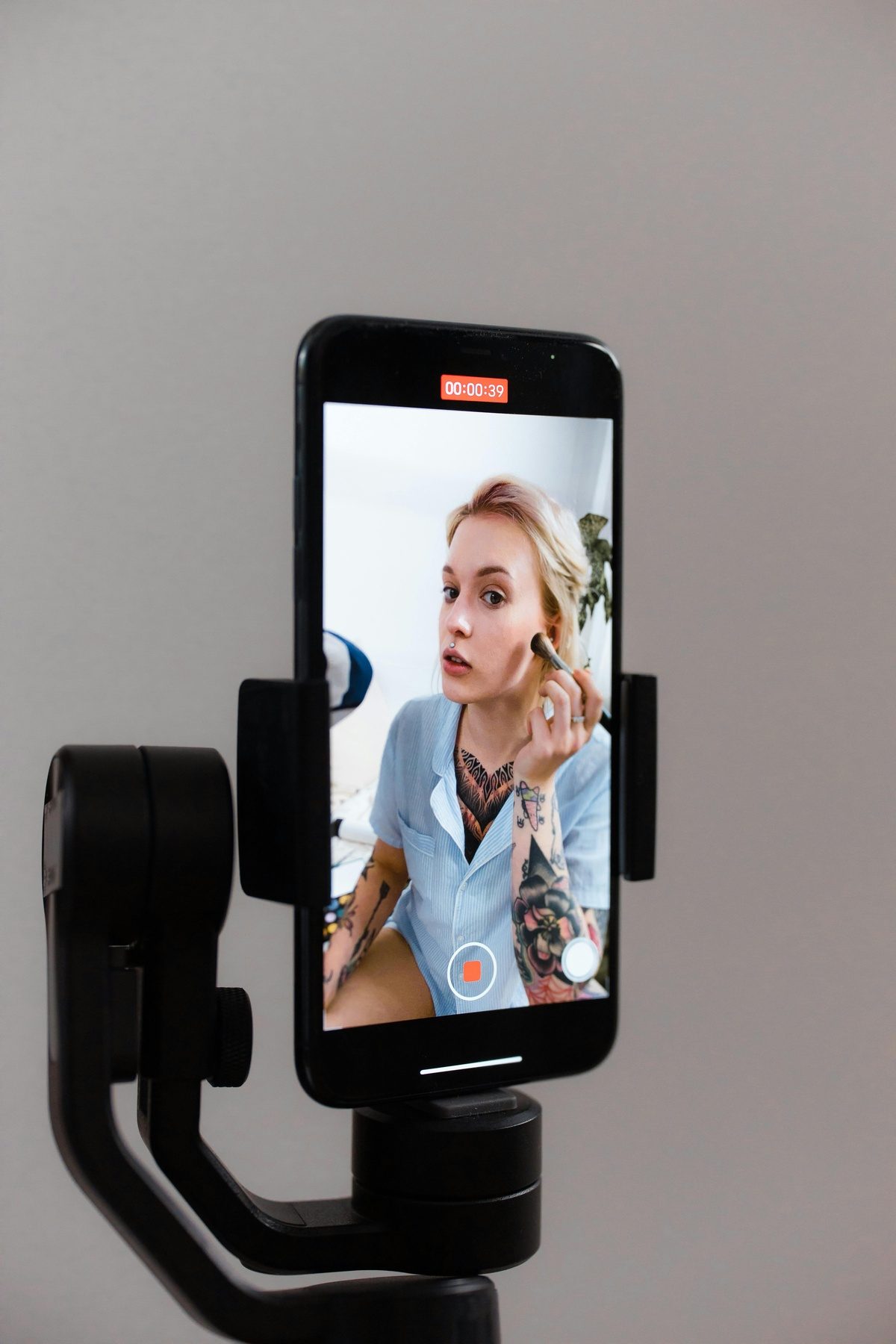
Australians spend an average of 38 hours and 51 minutes on TikTok every month — more than any other social platform in the country.
That's not a typo. Nearly 39 hours a month. For context, that's more than an entire working week staring at short videos. And 48% of Australians are on the platform at all.
So the question for your business isn't "is TikTok popular?" It clearly is. The real question is whether that audience is your audience, and whether the content format suits your business. The honest answer: for some businesses, TikTok is the most powerful free marketing tool available right now. For others, it's a distraction you can safely ignore.
This guide will help you figure out which category you're in.
TikTok Is a Discovery Engine, Not a Social Network
This is the most important thing to understand before you post a single video.
Instagram and Facebook operate on a social graph model — your content is shown to people who already follow you, plus some paid reach. If you have 50 followers, roughly 50 people (or fewer) see your posts.
TikTok's algorithm works completely differently. It shows your content to people who have never heard of you, based on signals like watch time, rewatches, and engagement. A brand new account with zero followers can publish a video that reaches 10,000 people organically within 48 hours. That kind of reach on Instagram would cost hundreds of dollars in ads.
This matters enormously for small businesses. You don't need to build an audience first. You just need to make a video the algorithm decides to push — and it will test every video you post with a small initial audience to see if it gets traction.
TikTok is also increasingly used as a search engine, particularly by Australians under 35. People search "best nail salon Melbourne", "how to tile a bathroom", or "electrician tip" directly on TikTok. If your content answers those questions, you show up in that search.
What the Under-16 Ban Actually Means for Your Strategy
In late 2025, Australia introduced a social media ban for users under 16. TikTok complied.
A lot of business owners heard this news and assumed it made TikTok less relevant. The opposite is true. The under-16 ban means TikTok's Australian audience is now exclusively adults. You're not marketing alongside children's content or worrying about an irrelevant teenage demographic. The platform is adults-only, and that audience skews heavily toward 18–40 year olds — exactly the demographic making purchase decisions for beauty services, home renovations, food, fitness, and retail.
If your target customer is in that 18–40 range, the ban made TikTok a cleaner, more focused channel, not a worse one.
Who Should Use TikTok: Australian Businesses That See Real Results
TikTok works best when the process or outcome of your work is visually interesting. Here's where we see Australian small businesses get genuine traction:
Beauty salons and nail techs. This is TikTok's sweet spot in Australia. Nail art transformation videos, gel manicure reveals, and "watch me do a full set" time-lapses regularly reach 50,000+ views with no paid promotion. The audience actively searches for nail content, and a single viral video can book out a salon for weeks.
Tradies with dramatic before/after results. Painters, landscapers, cleaners, tilers, and renovation specialists all have naturally compelling content to work with. A 30-second time-lapse of a backyard transformation or a dirty driveway being pressure-washed doesn't require any filming skill — just a phone propped up at the right angle. These videos travel well.
Food and hospitality. Behind-the-scenes kitchen content, food prep, plating, and "day in the life of a cafe owner" consistently outperform polished advertising. Authentic and slightly imperfect works better than produced. A Melbourne cafe showing their morning mise en place will outperform a commercial shoot.
Retail with physical products. If you sell something you can unbox, style, or demonstrate, TikTok Shop — which launched in Australia in 2025 — lets viewers buy directly from the video without leaving the app. For retail businesses, this is a genuine sales channel, not just a brand awareness play.
Fitness and gym businesses. Transformation stories, workout demos, and "what I ate" content perform reliably. Personal trainers in particular can build significant local followings through consistent educational content.
The common thread: your work produces something you can show. The video doesn't need to be edited. It doesn't need music. It just needs to show something satisfying, informative, or surprising.
Who Should Skip TikTok (An Honest Assessment)
TikTok is not for everyone. If any of the following apply, your time is better spent elsewhere.
Professional services targeting other businesses. Accountants, lawyers, financial planners, consultants — if your clients are business owners making considered, high-value decisions, they're not turning to TikTok to find their next accountant. B2B purchasing decisions happen on Google, LinkedIn, and through referral. TikTok won't change that.
Businesses targeting customers aged 55 and over. TikTok's penetration drops significantly in older demographics. If your primary customer is a 60-year-old homeowner or retiree, Instagram and Facebook will reach them more reliably.
Any business with no capacity for consistent video content. TikTok rewards consistency above almost everything else. Posting once a month will not work. If you or someone in your business cannot commit to posting 3–5 times per week for at least 2–3 months, you won't see meaningful results. The algorithm needs a sustained signal to know what your account is about and who to show it to.
Businesses where the work isn't visual. If what you do is entirely invisible — software development, bookkeeping, consulting — the format works against you. You can make it work, but you'll be fighting the medium rather than using it.
What Content Actually Works for Australian Small Businesses
Knowing you should post isn't enough. The format matters.
These content types consistently perform well for small businesses on TikTok:
- Satisfying transformations. Before-and-after in a single video. No narration needed.
- Time-lapses of your process. Speed up the work to show the full job in 30 seconds.
- "Story time" formats. "The time a customer asked me to..." narrated over footage of you working.
- POV (point of view). "POV: you're getting a full set at our salon." Puts the viewer in the chair.
- Educational how-to content. Short tips related to your trade — "3 signs your hot water system is about to fail" from a plumber gets found in TikTok search.
- Authentic behind-the-scenes. Showing the setup, the prep, the unglamorous parts. This builds trust faster than polished content.
The First Two Seconds Are Everything
On TikTok, users scroll at high speed. If your video doesn't hook them in the first two seconds, they're gone — and a low watch-time signal tells the algorithm not to push your content further.
The simplest framework to follow is hook, value, CTA:
- Hook (0–2 seconds): Say or show something that stops the scroll. "I turned this disaster of a backyard into this..." shown as a split-screen works. Starting with "Hi guys, welcome back to my channel" does not.
- Value (3–25 seconds): Deliver the satisfying content — the transformation, the tip, the behind-the-scenes moment. Keep it tight.
- CTA (final 3 seconds): Tell viewers what to do. "Follow for more Melbourne renovation content." "Link in bio to book." "Comment your suburb and I'll tell you if we service your area."
Optimal video length is 30–60 seconds for most small business content. Longer videos can work for tutorials, but the hook still needs to land in the first two seconds.
TikTok vs Instagram Reels: Do You Need to Choose?
No. The short answer is post on both.
TikTok and Instagram Reels use the same vertical video format. Once you've filmed a video for TikTok, you can repurpose it to Instagram Reels with a different caption. The audiences overlap but aren't identical — some of your potential customers will be on Instagram but not TikTok, and vice versa.
The main thing to avoid: posting your TikTok video directly to Instagram Reels with the TikTok watermark visible. Instagram suppresses watermarked content in the Reels feed. Use a tool like SnapTik or the TikTok "save without watermark" option before cross-posting.
One video, two platforms, twice the reach. This is the most efficient approach for a small business with limited time.
Realistic Expectations: What TikTok Actually Looks Like in Practice
TikTok is not a fast path to overnight success. For most small businesses, here's what a realistic trajectory looks like:
- Month 1: Low views, algorithm learning what your content is about, occasional video getting modest traction. Most posts under 500 views.
- Month 2: Algorithm starts showing your content to better-matched audiences. A video might break through to 2,000–5,000 views. First followers who are potential customers.
- Month 3+: If you've been consistent, one or two videos will hit 10,000+ views. Your follower count will grow. Enquiries or walk-ins start referencing TikTok.
The businesses that quit after 3 weeks because "it's not working" never reach month three. Organic reach on TikTok is still vastly better than Instagram or Facebook for new accounts — but it requires patience.
TikTok Shop: Worth It for Retail Businesses
TikTok Shop launched in Australia in 2025 and allows businesses to tag products directly in videos. A viewer watches your product demo, taps the tag, and buys without ever leaving TikTok.
For retail businesses selling physical products — clothing, beauty products, homewares, supplements — this is a genuine additional sales channel. Setup requires a TikTok Business account, an ABN, and a product catalogue. Commission rates are lower than most marketplaces, and the discovery potential is considerably higher.
For service businesses, TikTok Shop isn't relevant. Focus on using TikTok to drive traffic to your website or booking page instead.
TikTok Drives Traffic — Make Sure Your Website Is Ready
TikTok can generate real enquiries, but only if the destination is worth landing on.
Someone watches your renovation time-lapse, taps your profile link, and arrives at a slow, confusing, or outdated website. That's a wasted opportunity. The social media generates the interest — your website converts it.
If your website isn't currently doing that job, that's worth addressing before you invest time in TikTok content. See what's included in our web design service — or read more about how we help Melbourne businesses with social media marketing.
Frequently Asked Questions
My customers are tradespeople and businesses — is TikTok worth it for me?
Probably not as a primary channel. TikTok skews toward B2C. If you're selling directly to consumers (homeowners, locals, individuals), yes. If your customers are other businesses or construction companies, invest that time in Google SEO and LinkedIn instead.
How long should my TikTok videos be?
30–60 seconds is the optimal range for most small business content. Short enough to hold attention, long enough to deliver value. Educational tutorials can run to 90 seconds. Anything over 2 minutes needs a compelling reason to exist.
Do I need professional equipment?
No. A recent iPhone or Android phone shoots more than adequate video. Good lighting matters more than camera quality — a ring light ($30–$80 at most electronics stores) makes a noticeable difference. Stabilisation also helps: prop your phone against something or use an inexpensive tripod. The content itself is what drives performance, not production quality.
Should I use trending sounds?
Trending audio does get a small algorithmic boost on TikTok. But it's less critical than the visual content. If a trending sound fits naturally, use it. Don't contort your content to fit a sound that doesn't suit your business — it tends to look forced.
Is TikTok Worth It for Your Business?
TikTok in 2026 is the highest-reach free marketing channel available to Australian small businesses — but only for the right types of businesses.
If your work is visual, your customers are 18–40, and you can commit to consistent content for at least 3 months, TikTok is worth serious attention. The organic reach genuinely has no equivalent on any other platform right now.
If your customers are businesses, if you're targeting an older demographic, or if you simply don't have the time to maintain a consistent posting schedule, your effort is better spent elsewhere.
Be honest about which category you're in. Social media that suits your business will always outperform social media you're on because you feel you should be.
Want help putting a proper social media strategy together — or making sure your website converts the traffic TikTok sends you?
Talk to the team at CodeQy — or explore our social media management service.